High-Density Grinding Media Balls for Industrial Applications

The One Statistic That Changes Everything
A 2023 study found that reducing silicon carbide particle size from 5 microns to 300 nanometers increased the fracture toughness of the resulting ceramic composite by over 80%. This isn’t a linear improvement. It’s a phase change in material capability. This is the promise and the challenge of ultra fine submicron silicon carbide nano powder. Everyone talks about its potential, but few address the brutal trade-offs required to use it.
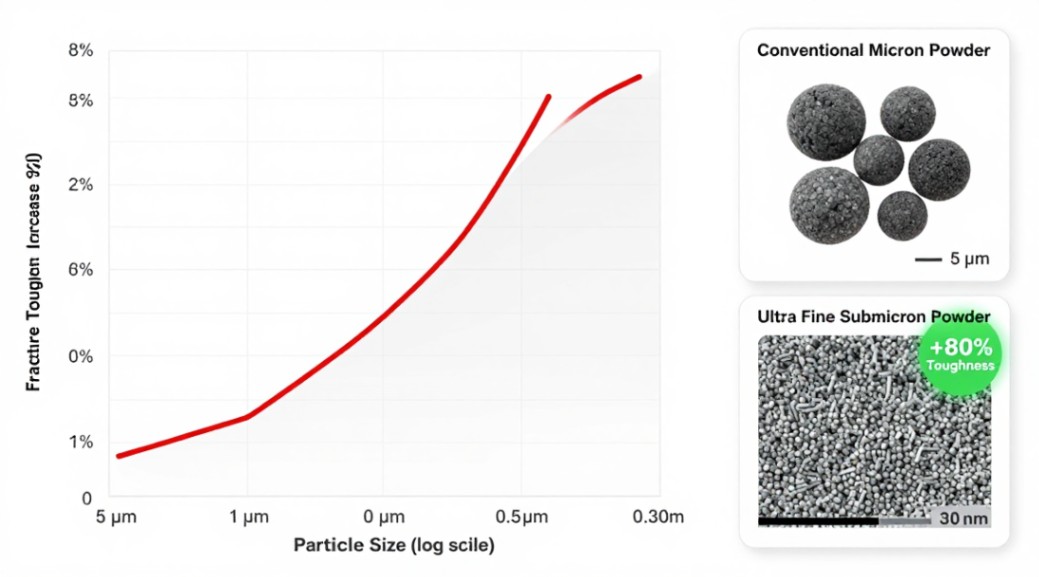
Ultra Fine Submicron SiC vs. Conventional Powder: A Brutally Honest Comparison
Forget marketing sheets. Your choice isn’t between good and better. It’s between two different engineering philosophies. Conventional micron-scale SiC powder (1-50 μm) is the workhorse. Ultra fine submicron and nano powder (typically < 0.5 μm) is the specialist athlete. Here is the breakdown every project manager needs.
The Case for Ultra Fine Submicron SiC
Its advantages are profound, but they demand respect.
- Superior Sintering Activity: Smaller particles pack tighter and sinter at lower temperatures (often 200-400°C lower). This enables dense, fine-grained ceramics that conventional powder simply cannot achieve.
- Radical Reinforcement: In metal or ceramic matrix composites, nano-scale SiC pins grain boundaries and blocks crack propagation. It doesn’t just strengthen; it toughens.
- Atomic-Level Polishing: In advanced slurries, these particles remove material at a molecular scale, yielding surface finishes that approach optical quality. Scratch-free becomes the standard.
- Thermal Management Mastery: When dispersed in polymers or metals, it creates ultra-efficient heat spreaders. The nano-scale interface minimizes thermal boundary resistance, a critical bottleneck in high-power electronics.
The Inconvenient Truths and Challenges
This performance comes at a cost. Ignore these points and your project will fail.
- Pyrophoric & Hazardous: At nano-scale, the powder can be explosively reactive. It demands inert atmosphere handling (Argon, N2) from synthesis to packaging. Standard factory SOPs are insufficient.
- The Dispersion Nightmare: Nanoparticles agglomerate with a vengeance. You aren’t buying powder; you’re buying a dispersion problem. Achieving a uniform mix in resins or metals requires high-shear processing and specialized surfactants.
- Price Premium: Synthesis via laser pyrolysis or plasma CVD is energy-intensive. Expect costs 5x to 20x higher than standard micron SiC.
- Quality Control is Everything: Batch consistency is non-negotiable. You must verify particle size distribution (not just average size), phase purity (absence of free silicon or carbon), and specific surface area. One bad lot can ruin an entire production run.
Where It Actually Wins: No-Compromise Applications
So when do you pay the premium and tackle the challenges? Only when the application leaves no other choice.
1. Next-Generation Composite Armor: Here, the ‘double continuous structure’ concept is key. Research shows infiltrating a carbon fiber preform with a slurry of ultra fine SiC creates a ceramic matrix that bonds at the nanoscale. This drops sintering temperatures from 2000°C to 1300°C while boosting toughness. You get lighter, tougher armor. There is no alternative material.
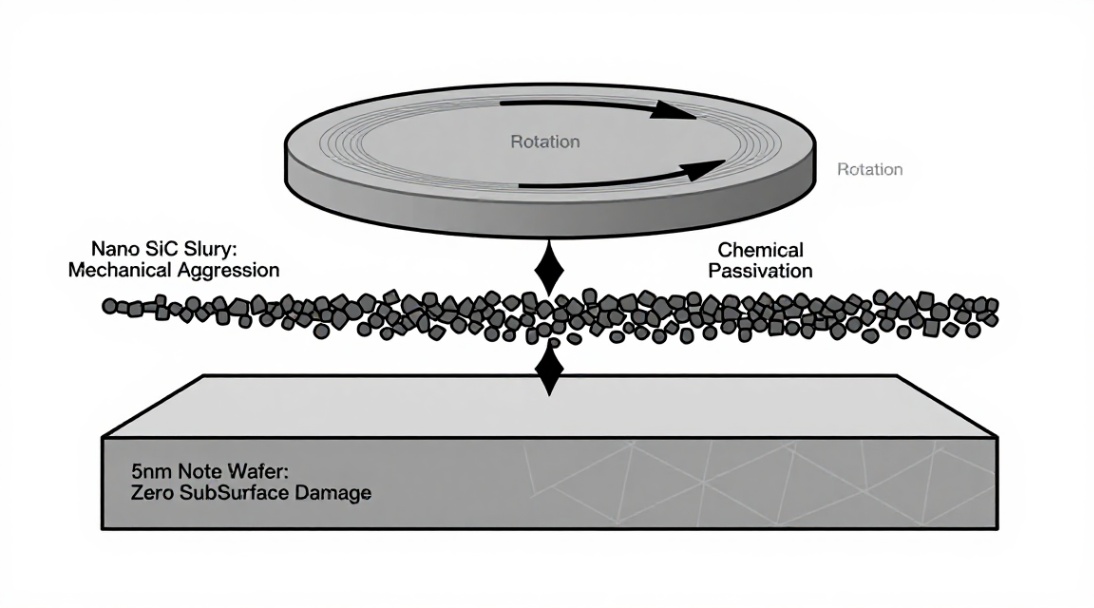
2. Semiconductor Wafer Polishing: As node sizes shrink below 5nm, the margin for surface defects vanishes. Nano SiC slurries provide the necessary combination of mechanical aggression and chemical passivation to planarize next-gen substrates without sub-surface damage. Conventional alumina or ceria slurries cannot match the cut rate and finish.
3. Sintering Additives for Technical Ceramics: Adding just 2-5% nano SiC to a batch of alumina or silicon nitride powder acts as a microscopic milling agent during sintering. It disrupts grain growth, leading to a final product with superior hardness, wear resistance, and thermal shock performance. It’s a force multiplier for existing ceramic formulations.
The Verdict: Is Ultra Fine Submicron SiC For You?
The feedback from advanced engineering forums like Reddit and specialized research communities is telling. Many users report breakthrough performance, followed by a stark warning: “Your entire process flow must be designed around this material’s personality.” It is not a drop-in replacement.
Choose conventional micron SiC if: Your priority is cost-effectiveness, you have standard milling/mixing equipment, and your performance specs have room for compromise. It’s the proven, reliable choice.
Choose ultra fine submicron/nano SiC if: You are pushing the limits of composite toughness, ceramic density, or surface finish. You have the budget for advanced material and the engineering rigor to handle its safety and dispersion demands. You are building a product where failure is not an option.
Stop Experimenting. Start Engineering.
The era of treating nano SiC as a lab curiosity is over. It’s an industrial tool for the most demanding applications. If your project aligns with the no-compromise scenarios above, hesitation is your biggest cost. The complexity of sourcing, qualifying, and integrating this material is significant. Partner with a supplier who provides full technical data packets (TDPs), not just datasheets. Insist on lot-specific analysis. Demand application support. Your competitor isn’t waiting. Forge the future or get left behind with yesterday’s materials. Contact a specialist supplier today and request a sample lot with complete characterization data for your specific application testing.
eduloc founded on October 17, 2012, is a high-tech enterprise committed to the research and development, production, processing, sales and technical services of ceramic relative materials such as Ultra. Our products includes but not limited to Boron Carbide Ceramic Products, Boron Nitride Ceramic Products, Silicon Carbide Ceramic Products, Silicon Nitride Ceramic Products, Zirconium Dioxide Ceramic Products, etc. If you are interested, please feel free to contact us.
RELATED POSTS
How to improve nanoparticles to make them more superior nanomaterials
The Ultimate Guide to Micron Size Silicon Carbide Lapping Powder for Metal
Selenide Manganese (MnSe)-Powder
The Successful Practice Of Zirconium Dioxide Balls In High-Temperature Sensor Packaging
Phlogopite Called "brown mica" after its color, "magnesia mica" after its composition. Article by: Hobart M. King, PhD, RPG