High-Density Grinding Media Balls for Industrial Applications

Tiny Ceramic Heroes: Why Medical Zirconium Balls Need That ISO 13485 Stamp

(Zirconium Dioxide Balls For Medical Applications Must Pass Iso 13485 Certification)
Think about the tiny parts inside your body helping you move or function. Many rely on incredibly tough, smooth ceramic balls. These aren’t ordinary marbles. They are Zirconium Dioxide Balls, often called zirconia balls. When doctors use them in medical devices, there’s one non-negotiable rule: they must pass ISO 13485 certification. This isn’t just paperwork. It’s a life-or-death guarantee. Let’s explore why these little ceramic spheres are so vital and why that certification stamp matters so much.
1. What Exactly Are Zirconium Dioxide Balls?
Picture super-tough marbles made from a special ceramic. Zirconium dioxide, or zirconia, is the key material. It’s not like regular pottery clay. This stuff is incredibly strong. It resists cracks really well. It’s also very hard. Think scratch-resistant. Crucially, it’s biocompatible. Your body generally doesn’t react badly to it. These balls are polished to an almost mirror-like finish. They need to be perfectly round and incredibly smooth. Why? Because they often fit into joints or bearings inside medical implants. Imagine a tiny ball spinning inside your artificial hip joint. That ball needs to move freely, without grinding or wearing down quickly. Zirconia balls do this job brilliantly. They handle constant pressure and movement inside the body. Their smoothness reduces friction. Their strength prevents shattering. Their biocompatibility means they don’t poison you. That’s why they are the go-to choice for critical moving parts inside you.
2. Why ISO 13485 Certification is Non-Negotiable
ISO 13485 isn’t just another certificate. It’s the gold standard rulebook for making medical devices safely. Think about it. Would you want a part inside your body made in a messy, uncontrolled factory? Probably not. This standard forces companies to prove they know what they are doing, every single day. It covers everything. How they design the balls. How they pick the raw zirconia powder. How they mix it. How they shape it into perfect spheres. How they bake it at super-high temperatures. How they polish it to that perfect finish. How they check every single ball for flaws. How they clean and package them. How they trace each batch back to its source. How they train their staff. How they fix problems when things go wrong. It demands proof. Lots of proof. Auditors come in. They ask tough questions. They check records. They watch the process. Passing this audit means the factory has a rock-solid system. It minimizes risks. It ensures every single zirconia ball shipped meets the exact same high standards. For something going inside a human body, this level of control is absolutely essential. No ISO 13485? No chance for medical use.
3. How Manufacturers Earn the ISO 13485 Stamp for Zirconia Balls
Getting that certification isn’t quick or easy. It’s a major commitment. First, the manufacturer must build a detailed Quality Management System (QMS). This is a massive set of documents. It describes every single step involved in making the zirconia balls. It defines the rules. Who does what. How they do it. How they check it. How they record it. Next comes the hard part: actually doing everything exactly as written, every single time. This requires serious discipline. Staff need constant training. Machines need perfect calibration. Raw materials must be tested rigorously. The production process itself is tightly controlled. Think precise temperatures during sintering. Think ultra-fine polishing techniques. Think multiple inspection stages. Every batch is sampled and tested. Key tests include measuring the ball’s size (diameter). Checking its roundness (sphericity). Testing its surface smoothness (roughness). Ensuring its crushing strength is high enough. Verifying its chemical purity. Crucially, every step must be documented. Traceability is key. You need to know which batch of powder made which batch of balls. An independent certification body then audits this entire system. They look at the documents. They watch the process. They check the records. They interview staff. They hunt for gaps or weaknesses. If the manufacturer passes this intense scrutiny, they get the ISO 13485 certificate. But it doesn’t stop. They get audited regularly to keep it. It’s a continuous effort, not a one-time thing.
4. Vital Medical Applications Relying on Certified Balls
Where do these tiny, tough balls actually get used? In places where failure is not an option. The most common spot is orthopedic implants. Think about artificial hip joints. The ball that fits into the socket? That’s often a zirconia ball. Its strength and smoothness are crucial for smooth movement and long life inside the body. Knee replacements also use them in bearings. Beyond joints, they appear in surgical tools. High-precision instruments need bearings that move smoothly without wobble or wear. Zirconia balls provide that. Some specialized dental implants use them. Certain types of bone drills rely on them. Even some heart pump mechanisms might incorporate them. The key point is this: these applications demand extreme reliability. The device must function perfectly for years, under constant stress, inside the harsh environment of the human body. A flawed ball could crack. A rough ball could cause painful friction or wear debris. An impure ball could cause inflammation. That’s why only zirconia balls made under the strict ISO 13485 umbrella are trusted for these critical jobs. They are the hidden engines enabling mobility and function.
5. FAQs About Medical Zirconium Dioxide Balls and ISO 13485
People often ask key questions about these vital components:
Are they safe inside the body? Yes, high-purity zirconia is biocompatible. It’s widely accepted. The ISO 13485 process ensures purity and prevents contamination, making it extra safe.
Why not use metal balls like steel? Metal can corrode over time inside the body. It can release ions. It can also wear faster against certain materials. Zirconia is more corrosion-resistant and often wears better, especially against plastic components.
What happens if a ball isn’t perfectly round? It causes problems. It creates uneven wear. It increases friction. It can make joints feel stiff or noisy. It might even cause the implant to fail sooner. ISO 13485 controls ensure near-perfect sphericity.
Does ISO 13485 guarantee the ball won’t break? No standard guarantees 100% perfection. But ISO 13485 drastically reduces the risk. It ensures the strongest materials are used correctly. It ensures rigorous testing finds weak balls before they ever leave the factory.
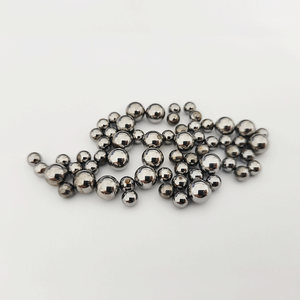
(Zirconium Dioxide Balls For Medical Applications Must Pass Iso 13485 Certification)
Can any zirconia ball supplier get this certification? Technically, yes, if they meet all the requirements. But it’s a huge investment in time, systems, and people. Only serious, dedicated manufacturers serving the medical field typically pursue and maintain it. It separates the true medical-grade suppliers from the rest.
RELATED POSTS
The Export Volume Of Silicon Carbide Balls Has Increased By 25% Year-On-Year, And Chinese Companies Are Rising
Properties and applications of Molybdenum Carbide Mo2C Powder
Copper(II) nitrate hemi(pentahydrate) (Cu(NO3)2•2.5H2O)-Lump
What Advantages does Spherical Silica Powder Have?
Zirconium Dioxide Ball Biocompatibility Improvement Helps Implant Medical Devices
