High-Density Grinding Media Balls for Industrial Applications

Key takeaways
- Grinding ball particle size distribution describes how ball sizes are spread across a range, not a single diameter.
- Large balls support coarse breakage, while small balls support finer grinding; a balanced distribution addresses both.
- PSD interacts with feed size, mill conditions, ball material, and wear over time.
- PSD is one factor among several and should be monitored alongside product fineness.
What Is Grinding Ball Particle Size Distribution?
Grinding ball particle size distribution (PSD) describes how the sizes of grinding balls in a mill are spread across a range, rather than being a single uniform diameter. It is usually expressed as the proportion of balls falling into different size intervals, such as large, medium, and small balls, and it directly shapes how the ball charge interacts with the material being ground.
In a working mill, the ball charge is rarely one size. A distribution means some balls are large enough to deliver high-impact forces, while others are small enough to create more contact points and finer grinding action. The balance among these size groups is what the term PSD captures, and it is one of the controllable variables in milling operations.
PSD is different from a single average ball diameter. Two mills could use balls with the same average size but very different distributions, and their grinding behavior would not be identical. For this reason, PSD is treated as a separate parameter when evaluating grinding media performance.
| Key Point | Explanation |
|---|---|
| Definition | The spread of grinding ball sizes across a range rather than a single diameter. |
| Common description | Proportions of balls grouped as large, medium, and small, or by diameter intervals. |
| Large balls | Provide higher impact energy for breaking coarse particles. |
| Small balls | Provide more contact points for finer grinding. |
| Balanced distribution | Combines size ranges to address coarse and fine particles in one mill. |
| Influencing factors | Feed size, material hardness, mill type, speed, liner design, and ball wear. |
| Link to ball material | Density and wear rate of alumina, zirconia, silicon carbide, or stainless steel affect behavior. |
| Monitoring | Sampling the ball charge and tracking product fineness over time. |
| Limits | PSD is one factor among mill speed, feed, and material properties. |
Why Particle Size Distribution Affects Milling Efficiency
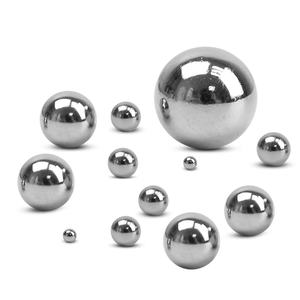
Milling efficiency depends on how effectively the ball charge transfers energy to the material. Large balls provide greater impact energy, which helps break coarse particles. Small balls provide more surface contact and are better suited to finer grinding. A distribution that includes both size ranges allows a mill to address coarse and fine particles in the same operation.
If the ball charge is too uniform, the mill may be efficient at one grinding stage but weak at another. For example, an all-large charge can break coarse feed but may leave fine particles under-ground, while an all-small charge may struggle with coarse particles. A balanced PSD helps the mill cover a wider range of particle sizes without relying on a single ball size.
PSD also influences the void spaces between balls and the way material flows through the charge. A well-graded ball charge can support consistent material transport and reduce uneven grinding zones. These effects are mechanical and operational, and they are why PSD is considered alongside ball material, mill speed, and feed properties.
Key Factors That Shape Grinding Ball Particle Size Distribution
The target PSD depends on the feed material. Coarser feed generally requires a larger proportion of large balls to achieve breakage, while finer product targets may call for more small balls. The hardness and grindability of the material also matter, because harder materials may need more impact energy before finer grinding becomes effective.
Mill type and operating conditions influence the practical PSD. The mill diameter, rotational speed, and liner design affect how balls move and how much energy reaches the material. Ball replenishment practice is another factor: as balls wear, the distribution shifts, so periodic addition of new balls of specific sizes is used to maintain the intended balance.
Ball density and material choice interact with size. A denser ball of a given diameter carries more mass and impact energy than a lighter ball of the same size, so the same size distribution can behave differently depending on whether the media are alumina, zirconia, stainless steel, or another material. PSD should therefore be evaluated together with ball material and density.
How Grinding Ball Particle Size Distribution Is Described
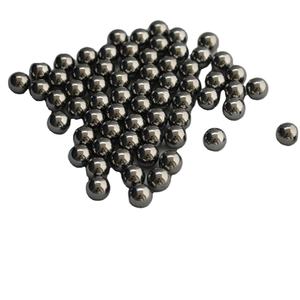
PSD is commonly described by the proportions of balls in defined size ranges. A simple description might group balls as large, medium, and small, while a more detailed record lists the percentage of balls in each diameter interval. This makes it possible to compare distributions between mills or over time as balls wear.
A distribution can also be described by its spread. A narrow distribution means most balls are close in size, while a broad distribution includes a wider range. Broad distributions are often used when a mill must handle a range of feed sizes, while narrow distributions may suit more controlled or specialized grinding tasks.
The description should be tied to the mill and the application. A PSD that works well in one mill may not transfer directly to another because mill geometry, speed, and feed differ. Recording PSD alongside operating conditions helps keep the information meaningful.
How PSD Interacts With Ball Material and Wear
Grinding ball material affects how PSD evolves. Balls wear during operation, and wear changes the size distribution over time. Wear rate depends on the ball material, the abrasive nature of the feed, and the mill environment. A distribution that starts balanced can drift toward smaller sizes if replenishment is not managed.
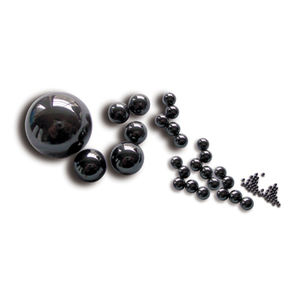
Different media materials have different density and wear behavior. Alumina, zirconia, silicon carbide, and stainless steel balls are used across applications such as ceramics, lithium batteries, semiconductors, and photovoltaics, and each material has its own operating considerations. PSD planning should account for how quickly the chosen media will wear and how replacement balls will be added.
Material choice and PSD are therefore linked decisions. Selecting a wear-resistant ball can help maintain the intended distribution for longer, while a distribution plan that ignores wear may lose its effectiveness. The practical goal is to keep the ball charge close to the target distribution throughout the campaign.
Practical Ways to Evaluate and Adjust PSD
A practical starting point is to define the feed size range and the target product fineness. From there, a mill operator can estimate the mix of large, medium, and small balls needed to cover both coarse breakage and fine grinding. This estimate should be treated as a starting point and refined with operating data.
Routine monitoring helps keep PSD on target. Sampling the ball charge and recording size proportions, along with mill throughput and product fineness, shows whether the distribution is drifting. If coarse particles remain in the product, adding or increasing the large-ball proportion may be considered; if fine grinding is weak, more small balls may be appropriate.
Adjustments should be made in steps and observed. Changing PSD affects the whole charge, so it is useful to track results over a period rather than reacting to a single measurement. Recording the changes and their effects builds a practical reference for the specific mill and application.
Limits and Common Misunderstandings About PSD
PSD is one factor among several. Mill speed, liner design, feed rate, material properties, and slurry conditions also affect milling efficiency. Improving PSD alone cannot compensate for a mill that is poorly matched to its task, and PSD should be evaluated as part of the overall milling system.
A common misunderstanding is that a single ideal PSD exists for all mills. In practice, the suitable distribution depends on the feed, the target product, the mill, and the media material. Another misunderstanding is that more small balls always improve fineness; without enough large balls, coarse particles may not break efficiently.
PSD also does not replace direct measurement of product quality. The distribution is a guide for the ball charge, while product fineness and consistency confirm whether the milling result meets requirements. Both should be monitored together.
Frequently asked questions
Does a wider grinding ball particle size distribution always improve milling efficiency?
Not always. A wider distribution can help a mill handle both coarse and fine particles, but the suitable spread depends on the feed, target product, mill design, and ball material. A distribution that is too broad or poorly matched may not improve results.
How does ball wear affect particle size distribution?
As balls wear, their diameters decrease, so the distribution shifts over time. Wear rate depends on the ball material, feed abrasiveness, and mill environment. Periodic addition of new balls of specific sizes helps maintain the intended distribution.
Can PSD be the same for different grinding media materials?
The same size distribution can behave differently depending on ball density and wear behavior. Alumina, zirconia, silicon carbide, and stainless steel balls have different properties, so PSD should be evaluated together with the chosen material.
About Us
We are a professional supplier of high-performance grinding media, including alumina, silicon carbide, zirconia, and stainless steel balls. Our products serve lithium batteries, semiconductors, photovoltaics, and ceramics. With advanced technology and strict quality control, we deliver reliable quality, customized solutions, and fast delivery to global partners.