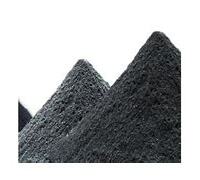
High-Density Grinding Media Balls for Industrial Applications

Abrasive Alchemy: Defining Silicon Carbide Powder for Metal Lapping
Most shops obsess over diamond compound for precision work. They’re wrong. For lapping metals-flattening, polishing, deburring-the data reveals a different winner. Silicon carbide (SiC) powder removes material from hardened steels and alloys up to 40% faster than aluminum oxide or garnet abrasives at a fraction of diamond’s cost. This synthetic abrasive, second only to diamond in hardness, is engineered not for brute strength alone, but for controlled aggression. Its particles fracture under pressure, creating perpetually sharp edges that cut metal efficiently. This is not a polishing compound; it’s a rapid stock removal and surface conditioning tool.

The Mechanics of a Sharper Edge
Diamond particles are blocky and tend to polish. Silicon carbide grains are angular and brittle. When you apply pressure during lapping, these grains fracture. This micro-fracturing constantly exposes new, razor-sharp cutting points. The result is a consistently aggressive cut across the entire lapping cycle. You get predictable, fast material removal instead of a compound that glazes over and slows down. For achieving a flat reference surface on tool steel, tungsten fixtures, or cast iron components, this controlled cutting action is unmatched.
The Grit Progression: Your Roadmap to a Perfect Finish
You cannot jump from a rough mill finish to a mirror. Precision is a staircase. Silicon carbide powder provides the steps through standardized grit sizes. Using the FEPA ‘F’ grading system is non-negotiable for repeatable results.
- F220 – F400 (Coarse): This is your workhorse stage for aggressive stock removal, flattening, and correcting major surface imperfections. Expect removal rates of 5-15 microns per minute on hardened steel.
- F500 – F800 (Medium): This stage removes the deep scratches from coarse grits. It prepares the surface for final finishing, establishing the foundation for true flatness.
- F1000 – F1200 (Fine): The final finishing stage. This produces the fine, uniform satin finish required for sealing surfaces, reducing friction, or preparing for subsequent ultra-fine polishing.
Executing the Process: A Step-by-Step Protocol
Theoretical knowledge fails without proper execution. Follow this sequence precisely.
1. Surface Preparation & Safety
Clean the metal part with solvent to remove oil. Wearing nitrile gloves, secure the part. Your first action is always safety: don a NIOSH-approved N95 respirator or better. Silicon carbide dust is a severe respiratory irritant. Safety glasses are mandatory. Work in a well-ventilated area or use dust collection.
2. Creating and Applying the Lapping Slurry
Dry powder is useless. You need a carrier fluid. For most metals, a light machine oil (ISO VG 10-22) or kerosene works best. Water can cause rust. Mix the silicon carbide powder with the fluid to a consistency resembling thin paint or milk. A typical starting ratio is 1 part powder by volume to 3 parts oil. Apply sparingly to your lapping plate.

3. The Lapping Technique
Use a dedicated lapping plate-cast iron is ideal for its ability to embed abrasive. Using a figure-eight motion, lap the metal workpiece under light, consistent pressure. The slurry should become gray with removed metal. Never let the surface dry out; add more slurry or carrier fluid as needed. After several passes, clean the workpiece and plate, then move to the next finer grit. This cross-hatch pattern from changing directions with each grit is the secret to true flatness.
| Stage | Primary Goal | Typical Grit (FEPA) | Slurry Ratio (Powder:Oil) | Expected Finish Ra (µm) |
|---|---|---|---|---|
| Roughing | Fast stock removal, flattening | F220 – F400 | 1:2 to 1:3 | 0.8 – 0.4 |
| Finishing | Scratch removal, prep for final finish | F500 – F800 | 1:3 to 1:4 | 0.2 – 0.1 |
| Final Finish | Uniform satin finish | F1000 – F1200 | 1:4 to 1:5 | < 0.1 |
Silicon Carbide vs. Diamond: The Real Cost Analysis
Diamond abrasive costs 15-30 times more per carat than silicon carbide powder. For the initial flattening and stock removal on metals, diamond is wasteful overkill. Its extreme hardness leads to plate grooving and slower cutting on ductile materials. Use diamond for the final micron-level polish on carbide or ceramics. Use silicon carbide for the 95% of the work that comes before. This strategy slashes consumable costs by over 60% without sacrificing quality.
Disposal and Environmental Responsibility
The used slurry is a hazardous mixture of heavy metals, oil, and abrasive. Let the slurry settle in a sealed container. Decant the oil for proper recycling as waste oil. The remaining sludge, containing metal fines and silicon carbide, must be disposed of as hazardous solid waste according to local regulations. Never pour it down the drain.

The Final Word
Silicon carbide powder is the undisputed champion for efficient, cost-effective metal lapping. Its sharp, self-renewing edges cut faster than traditional abrasives. Its controlled grit progression builds true flatness. Stop wasting money on diamond for rough work. Your next step is to test it. Purchase a basic kit with F400, F800, and F1200 grits, a cast iron lap plate, and proper PPE. Run a test on a scrap piece of tool steel. Measure your time and finish. The results will change your standard operating procedure. Buy your silicon carbide lapping kit today and reclaim precision on your terms.
eduloc founded on October 17, 2012, is a high-tech enterprise committed to the research and development, production, processing, sales and technical services of ceramic relative materials such as The. Our products includes but not limited to Boron Carbide Ceramic Products, Boron Nitride Ceramic Products, Silicon Carbide Ceramic Products, Silicon Nitride Ceramic Products, Zirconium Dioxide Ceramic Products, etc. If you are interested, please feel free to contact us.
RELATED POSTS

Lanthanum Boride (LaB6)-Sputtering Target
Augite A common rock-forming mineral of dark-colored igneous rocks. Article by: Hobart M. King, PhD, RPG
Impact of extreme heat in Europe on the 32mm cable gland market by stimulating electricity price increases
Gold Nickel Alloy (AuNi (80/20 Wt%))-Granules
Ytterbium(III) Oxalate Hydrate (Yb2(C2O4)3•xH2O)-Crystalline