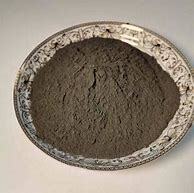
High-Density Grinding Media Balls for Industrial Applications

Tiny Alumina Balls: The Unsung Heroes of Perfect 3D Printing Powder

(3d Printing Powder Preparation: Alumina Ball Grinding Precision New Standard)
Forget the printer itself for a second. The real magic in high-end 3D printing starts much earlier, with the powder. Not just any powder, but stuff so fine and consistent it feels like smoke. Getting powder this perfect is hard. Really hard. That’s where tiny, incredibly hard ceramic balls step in. Alumina ball grinding is changing the game for powder prep, setting a whole new bar for precision. Let’s dive into why these little spheres matter so much.
1. What Exactly is Alumina Ball Grinding?
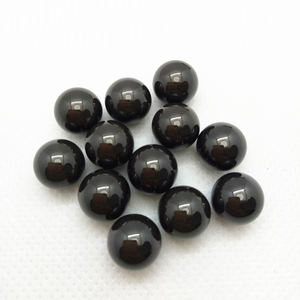
Think about grinding coffee beans. You want them fine and even, right? Now imagine grinding super-tough materials into powder finer than flour. That’s powder preparation for advanced 3D printing, especially metals and ceramics. Alumina ball grinding is a key method for doing this. It uses grinding media – countless small balls – made from aluminum oxide (alumina). Alumina is incredibly hard. It’s almost as hard as diamonds. These balls are tumbled inside a large rotating container called a mill, along with the raw material chunks needing grinding. As the mill spins, the balls collide with each other and the material. The force of these countless impacts crushes the material into smaller and smaller particles. The goal? To create a powder where every single particle is nearly the same size and perfectly round. This uniformity is absolutely critical for successful, high-quality 3D printing. It’s not just grinding; it’s precision particle engineering.
2. Why is This Precision Grinding So Crucial for 3D Printing?
Ordinary grinding methods often fall short for 3D printing powders. Here’s why precision from alumina ball grinding is non-negotiable:
Flowability Matters: Imagine trying to pour lumpy sand versus fine, dry beach sand. Powder in 3D printers needs to flow like that fine beach sand. It must spread evenly, layer by incredibly thin layer, across the print bed. Powders with inconsistent particle sizes or rough, jagged shapes don’t flow well. They clump. They bridge. They create uneven layers. This leads directly to failed prints, weak spots, and rough surfaces. Alumina ball grinding creates smooth, spherical particles that flow like a dream.
Packing Density is Key: Think about stacking marbles versus stacking irregular rocks. Spherical particles pack together much more tightly and uniformly. In 3D printing, tightly packed powder layers fuse together better during the printing process (like with lasers or electron beams). This results in printed parts that are denser, stronger, and have fewer internal flaws or voids. Weak parts simply won’t cut it for aerospace or medical implants.
Consistency Equals Reliability: Every single layer of powder must be identical. Variation in particle size or shape means variation in how the powder absorbs energy during printing. This leads to uneven melting, inconsistent material properties within the part, and unpredictable results. Batch after batch needs to be identical. Alumina ball grinding delivers this level of repeatable consistency far better than older methods. It sets a new standard for reliability.
3. How Does Alumina Ball Grinding Actually Work?
It’s a fascinating process combining simple mechanics with advanced control:
The Mill: The heart is a large, rotating drum or jar. This is the ball mill. It can be horizontal or vertical. The size and speed of rotation are carefully controlled.
The Charge: Inside the mill, you load the raw material (often pre-crushed to small chunks) and the alumina grinding balls. The ratio of balls to material is critical. Too few balls, grinding is inefficient. Too many, and you get less effective impacts.
The Grinding Action: As the mill rotates, the balls are lifted up the side by centrifugal force and friction. They reach a point where gravity overcomes this force. They then cascade or tumble down onto the material and other balls below. This constant tumbling creates a crushing and grinding action through impact and slight abrasion. The incredibly hard alumina balls efficiently break down the material without wearing down much themselves.
Control & Refinement: Operators control several factors: mill rotation speed, grinding time, the size of the alumina balls used, the atmosphere inside the mill (sometimes inert gas is needed), and sometimes adding a liquid to make a slurry. The goal is to maximize efficient grinding while minimizing contamination and achieving the exact target particle size distribution. Grinding continues until sophisticated particle size analyzers confirm the powder meets the strict specifications. It’s a blend of brute force and delicate control.
4. Where is This Super-Powder Used? Key Applications
Powder perfected by alumina ball grinding unlocks possibilities across demanding industries:
Aerospace & Defense: Jet engine turbine blades, rocket components, lightweight structural parts. These endure extreme stress, heat, and forces. They demand incredibly strong, heat-resistant metals like titanium alloys or nickel-based superalloys printed to near-perfection. Consistent, high-flow powder is essential for these complex, critical parts.
Medical & Dental: Think hip replacements, dental crowns, custom surgical guides. Biocompatible materials like titanium or specialized cobalt-chrome alloys are printed. Precision powder ensures implants are strong, fit perfectly, and have the necessary surface properties for bone integration. Smooth powder flow is vital for intricate dental structures.
Automotive Racing & High-Performance: Lightweighting is everything. Components like custom pistons, turbocharger parts, or heat exchangers printed from high-strength aluminum or steel alloys improve performance and efficiency. Reliable powder means reliable parts under high stress.
Tooling & Industrial: Cutting tools, molds, and dies often need complex geometries and exceptional wear resistance. Printing these from tool steels or carbides requires powder that sinters or melts consistently for maximum hardness and durability.
Advanced Research & Electronics: Pushing boundaries in materials science often involves printing novel alloys or ceramics. Consistent powder is fundamental for replicating experiments and developing new components like heat sinks or specialized sensors. Fine features demand ultra-precise powder.
5. Alumina Ball Grinding: Your Questions Answered
Let’s tackle some common curiosities:
Are alumina balls better than steel balls? Usually, yes, for critical applications. Steel balls can wear down over time, contaminating the powder with iron. Alumina balls are much harder and more wear-resistant. They keep the powder pure, especially vital for reactive metals like titanium or aluminum. They also generate less heat.
How long does the grinding process take? It varies a lot. Factors include the starting material hardness, the target fineness, the mill size, and the ball charge. Grinding ultra-fine powders can take many hours, even days. Patience is needed for perfection.
Can any material be ground this way? Mostly, yes. Alumina ball grinding works for metals, ceramics, and even some composites. However, very soft or sticky materials might cause problems (like clogging). Sometimes different grinding media or methods are chosen for specific materials.
Is the powder perfectly spherical? It gets very close! The tumbling and impact action tends to round off sharp edges, creating predominantly spherical or near-spherical particles. This is much better than the irregular shapes from basic crushing. True spheroidization often needs additional steps like plasma processing.
(3d Printing Powder Preparation: Alumina Ball Grinding Precision New Standard)
Doesn’t this add a lot of cost? It does add cost compared to simpler methods. High-purity alumina balls aren’t cheap. The process takes time and energy. But the payoff is huge: vastly superior print quality, fewer failed prints, stronger final parts, and the ability to print complex, high-value components. For serious 3D printing, it’s an essential investment. Cutting corners on powder quality means wasting money on failed prints and weak parts.
RELATED POSTS
High Purity 3D Printing Nickel Alloy IN718 Powder
Ruthenium(III) nitrosylchloride (Ru(NO)Cl3)-Crystalline
Lithium hexafluorophosphate (LiPF6)-Powder