High-Density Grinding Media Balls for Industrial Applications

Key takeaways
- Alumina ball size directly affects grinding efficiency, fineness, and energy use.
- Smaller balls provide more contact points for fine grinding; larger balls deliver impact for coarse grinding.
- Key factors include feed size, target fineness, material hardness, slurry viscosity, and mill type.
- Use graded media (mix of sizes) to improve grinding efficiency and particle distribution.
- Avoid common mistakes like using a single size or ignoring wear; always test with your actual material.
Understanding Alumina Ball Particle Size in Coating Grinding
Selecting the appropriate alumina ball particle size is a critical decision in coating grinding. The particle size directly influences grinding efficiency, final product fineness, and overall energy consumption. Understanding the relationship between ball size and the mechanical energy transferred to the coating material is the first step.
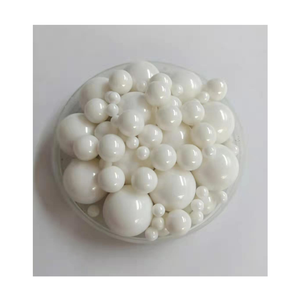
Smaller alumina balls provide a higher number of contact points per unit volume, which benefits fine grinding and even particle dispersion. However, they may lack the impact force needed to break down larger or harder agglomerates. Larger balls deliver stronger impact energy, suitable for initial coarse grinding, but create fewer contact points, which can lead to uneven particle size distribution in the final coating slurry.
The goal is to match the ball size with the desired particle size of the coating material. For a submicron dispersion, small balls (e.g., 0.5–1 mm) are often preferred. For reducing large particles to moderate fineness, medium balls (e.g., 2–5 mm) may be more effective. The selection also depends on the slurry viscosity and the type of mill used (e.g., ball mill, attritor, or bead mill).
Key Factors That Influence the Choice of Alumina Ball Size
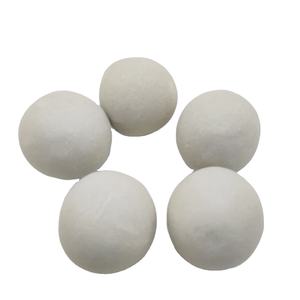
Several factors determine the optimal alumina ball particle size for coating grinding. The initial particle size of the coating material is the starting point: larger feed particles require larger balls to achieve effective breakage. The target fineness also matters—finer targets demand smaller balls to increase the number of grinding contacts.
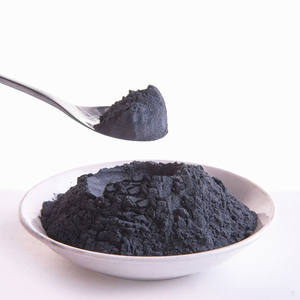
The hardness and abrasiveness of the coating material play a significant role. Harder materials may require larger balls to generate sufficient impact energy, while softer materials can be ground effectively with smaller balls. For example, silicon carbide polishing powder, used in gemstone finishing, is a hard material that may require larger alumina balls for effective initial breakage. The viscosity of the slurry affects ball mobility; high-viscosity slurries may need larger balls to maintain movement and avoid settling.
Mill type and operating conditions are equally important. In a vertical stirred mill, smaller balls are often used because the agitation provides sufficient energy. In a tumbling ball mill, a mix of sizes (graded media) is common to fill voids and optimize grinding efficiency. The density of the alumina balls (typically 3.6–3.8 g/cm³) also influences the grinding action.
General Guidelines for Selecting Alumina Ball Particle Size
A practical approach to selecting the right alumina ball size follows a multi-step process. First, determine the maximum feed particle size of your coating material. In ceramic manufacturing, high-purity silicon carbide powder is often ground with alumina balls, requiring careful sizing based on feed particle size. A general rule is that the ball diameter should be at least 20–30 times the diameter of the largest feed particle to ensure effective impact. Second, define the target particle size distribution needed in the final coating.
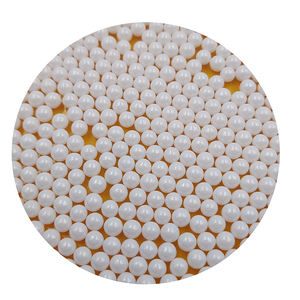
For coarse grinding stages (e.g., reducing particles from 100 µm to 20 µm), use larger balls, typically in the range of 5–15 mm. For medium grinding (20 µm to 5 µm), 2–5 mm balls are a common choice. For fine and ultra-fine grinding (below 5 µm), balls smaller than 2 mm, often down to 0.3 mm, are recommended. These ranges are general and should be adjusted based on specific material properties and equipment.
Another effective strategy is graded media—mixing different ball sizes in a single mill charge. This fills the voids between larger balls, increasing the number of contact points and improving grinding efficiency. The optimal ball size distribution can be calculated using empirical formulas like the Bond equation, but in practice, trial runs are often necessary to fine-tune the selection.
Common Mistakes to Avoid When Choosing Alumina Ball Size
One common mistake is using a single ball size for all grinding stages. While convenient, this often leads to inefficient grinding and poor particle size distribution. For instance, grinding a pre-polish stage 400 grit silicon carbide abrasive with a single ball size can result in uneven particle distribution. Using only large balls may leave fine particles unground, while using only small balls may not break coarse particles effectively.
Another mistake is ignoring the wear rate of alumina balls. Over time, balls wear down and change size, altering the grinding dynamics. Monitor ball size and replace worn media to maintain consistent performance. Additionally, selecting balls too small for the slurry viscosity can cause the balls to float or settle, reducing grinding efficiency.
Finally, neglecting to test the chosen ball size with your actual coating material is a common pitfall. Theoretical guidelines provide a starting point, but the interaction between the ball, the coating material, and the mill environment can vary. Always conduct small-scale trials to verify the ball size choice before scaling up production.
Conclusion: Best Practices for Alumina Ball Size Selection
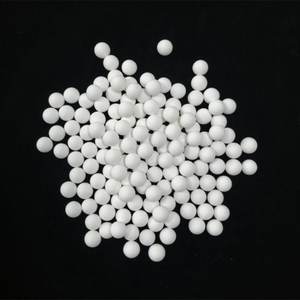
Choosing the right alumina ball particle size for coating grinding requires balancing material properties, equipment, and process goals. Start by analyzing the feed material and target fineness, then select an initial ball size following general guidelines. Implement a graded media approach if possible, and always validate the choice through testing.
Regular monitoring of ball wear and slurry characteristics helps maintain optimal grinding performance over time. By avoiding common mistakes and adapting to your specific application, you can achieve consistent coating quality, reduce energy consumption, and extend the life of your grinding media. For further assistance, consult with grinding media suppliers who can provide tailored recommendations based on your process parameters.
Frequently asked questions
What is the typical size range of alumina balls used in coating grinding?
Alumina balls for coating grinding typically range from 0.3 mm to 15 mm in diameter. Very small balls (0.3–1 mm) are used for ultra-fine grinding, while larger balls (5–15 mm) are used for coarse grinding. The exact size depends on the material and process requirements.
How does slurry viscosity affect alumina ball size selection?
High-viscosity slurries hinder ball movement, so larger balls are often needed to maintain effective grinding action. Low-viscosity slurries allow smaller balls to move freely, enabling finer grinding. The ball size must be matched to the slurry's flow characteristics to prevent settling or floating.
Can I use the same alumina ball size for different coating materials?
It is not recommended. Different materials have varying hardness, particle size, and grinding behavior. Using the same ball size for all materials may lead to inefficient grinding, excessive wear, or poor product quality. Always tailor the ball size to the specific material and target fineness.
What is graded media and why is it beneficial?
Graded media means using a mixture of different ball sizes in the mill. This fills the voids between larger balls, increasing the number of contact points and improving grinding efficiency. It also helps achieve a broader particle size distribution and can reduce grinding time.
About Us
We are a professional supplier of high-performance grinding media, including alumina, silicon carbide, zirconia, and stainless steel balls. Our products serve lithium batteries, semiconductors, photovoltaics, and ceramics. With advanced technology and strict quality control, we deliver reliable quality, customized solutions, and fast delivery to global partners.
RELATED POSTS
Why sodium silicate powder can be used as rubber waterproof agent
A 17% increase in renewable energy generation in 2021 has also had an impact on the copex gland 25mm market
Talc: The Softest Mineral What is Talc? How Does it Form? How is Talc Used? Article by: Hobart M. King, PhD, RPG
Copper Nickel Indium Alloy (Cu36Ni5In)-Powder
Nano-Coating Of Stainless Steel Ball Assists Antibacterial Upgrade Of Medical Devices