High-Density Grinding Media Balls for Industrial Applications

Quartz Ceramic

1800 Degree High Temperature Customizable Quartz Ceramic Crucible

4 Inch Dry Diamond Polishing Pad for Ceramic Tile Marble Granite Quartz

Corrosion Resistant Quartz Ceramic Crucible Boat for Metal Melting

Quartz Ceramic Crucible for Melting Platinum Gold Silver and Copper
Overview of Quartz Ceramic
Quartz ceramic, also known as fused silica ceramic, is a high-performance technical ceramic composed primarily of silicon dioxide (SiO₂) in a non-crystalline state. It is manufactured by fusion and controlled cooling of high-purity silica, resulting in a material that combines the best properties of glass and traditional ceramics. Our quartz ceramic products are engineered to deliver exceptional stability, purity, and performance in the most demanding industrial applications.


Features of Quartz Ceramic
- Extreme Thermal Shock Resistance: Due to its extremely low coefficient of thermal expansion (CTE), quartz ceramic can withstand rapid temperature changes without cracking.
- Low Thermal Conductivity: Acts as an excellent thermal insulator, protecting surrounding components from high heat.
- High Chemical Purity: Typically >99.9% SiO₂, making it inert to most acids and resistant to corrosion.
- Dielectric Strength: Excellent electrical insulator even at high temperatures and high frequencies.
- High Refractoriness: Retains its shape and strength at continuous operating temperatures up to 1100°C.
Specifications of Quartz Ceramic
| Property | Unit | Typical Value |
|---|---|---|
| Purity | % | ≥ 99.5 (SiO₂) |
| Density | g/cm³ | 1.90 - 2.20 |
| Max Working Temp | °C | 1100 (Continuous) |
| Thermal Conductivity | W/m·K | 1.4 - 1.8 |
| Coefficient of Expansion | 10⁻⁶/K | 0.5 - 0.6 |
| Dielectric Strength | KV/mm | 15 - 20 |
| Available Forms | - | Rods, Plates, Tubes, Custom Machined Parts |
Note: Specifications can be tailored based on custom molding or machining requirements.

Applications of Quartz Ceramic
- Metallurgical Industry: Crucibles, pouring nozzles, and thermocouple protection tubes for molten metal.
- Semiconductor Manufacturing: Jigs, furnace liners, and diffusion components requiring ultra-high purity.
- Aerospace & Defense: Radomes (due to electromagnetic transparency), thermal insulation shields.
- Chemical Processing: Reactor liners and piping for handling corrosive acids.
- Glass & Optics: Rollers for glass tempering furnaces and optical mirror blanks.
Company Introduction
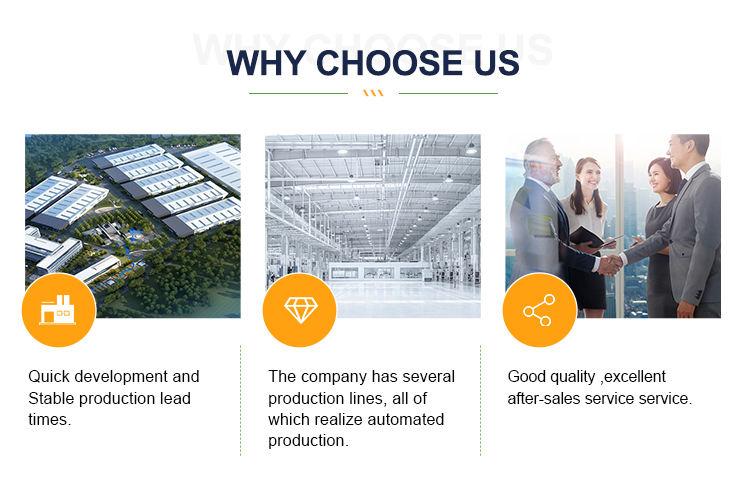
Welcome to Eduloc, a leading global supplier of high-quality ceramic grinding balls. Our product range includes,Mullite Ceramic, Quartz Ceramic, Aluminum Nitride Ceramic, Silicon Nitride Ceramic, Silicon Carbide Ceramic designed for industries such as mining, chemicals, coatings, electronics, and pharmaceuticals. We are committed to providing durable and efficient grinding solutions tailored to our customers' diverse needs. With advanced manufacturing technology and stringent quality control, our ceramic grinding balls excel in wear resistance, corrosion resistance, and thermal stability. Partner with us for reliable products and exceptional service that enhance your production efficiency and reliability.
If you have any questions, please feel free to contact us.
Payment Methods
T/T, Western Union, Paypal, Credit Card etc.
Shipment Methods
By air, by sea, by express, as customers request.

5 FAQs of Quartz Ceramic
1. What is the difference between quartz ceramic and ordinary glass?
Quartz ceramic (fused silica) is engineered for industrial use. Unlike ordinary glass, it contains no additives, has a much higher service temperature, and can withstand rapid heating and cooling (thermal shock) that would shatter standard glass.
2. Can quartz ceramic be machined into complex shapes?
Yes. While it can be formed in molds, our quartz ceramic components are often supplied in a semi-sintered state for machining. We offer precision grinding and cutting services to achieve tight tolerances and complex geometries.
3. Is this material safe for use with food or pharmaceuticals?
Yes. Due to its high chemical purity and inertness, quartz ceramic does not react with or contaminate products, making it suitable for pharmaceutical processing equipment and high-purity food manufacturing.
4. What is the maximum operating temperature?
For continuous use, our standard quartz ceramic products are rated up to 1100°C. For short-term exposure or specific applications, please consult our engineering team to verify the material limits.
5. How does the porosity affect its use in liquids?
Standard quartz ceramic has a slight porosity. However, for liquid containment or vacuum environments, we offer glazed or fully dense variants that create a non-porous, vacuum-tight surface.